
The Seaside Dragonlet

In every broader group of animals or plants it seems there’s always a weirdo. Weirdness is usually a product of adaptation and evolution. Everyone is eating plants, so someone decides to eat animal protein and launches a new species - a few thousand generations later. Everyone lays eggs in trees, so you lay eggs underground. Or you start hatching your eggs inside yourself and giving live birth! Someone is always being weird, and that’s how we ended up with the platypus.
The Seaside Dragonlet (Erythrodiplax berenice) is the platypus of dragonflies.

First, let’s refresh ourselves about dragonflies. There were huge dragonfly-like things with wingspans over 60cm (2 feet) flying around 325 million years ago, long before the first dinosaurs popped up. The true ancestors of modern Odonates (the taxonomic order of dragonflies and damselflies is called Odonata) got rolling in the Triassic period about the time dinosaurs became a thing. Today there are more than 6,000 species of Odonate with about half of them being dragonflies. They’re all predatory killing machines and they all lay eggs in freshwater where the larvae live before developing into terrestrial flying adults.
Except not every single one of them lays eggs in freshwater. Several use brackish water in tidal estuaries when necessary, but seem to prefer freshwater. One species, however, is a denizen of saltmarshes and has no interest in freshwater. Meet the Seaside Dragonlet, the western hemisphere’s only marine-breeding dragonfly.
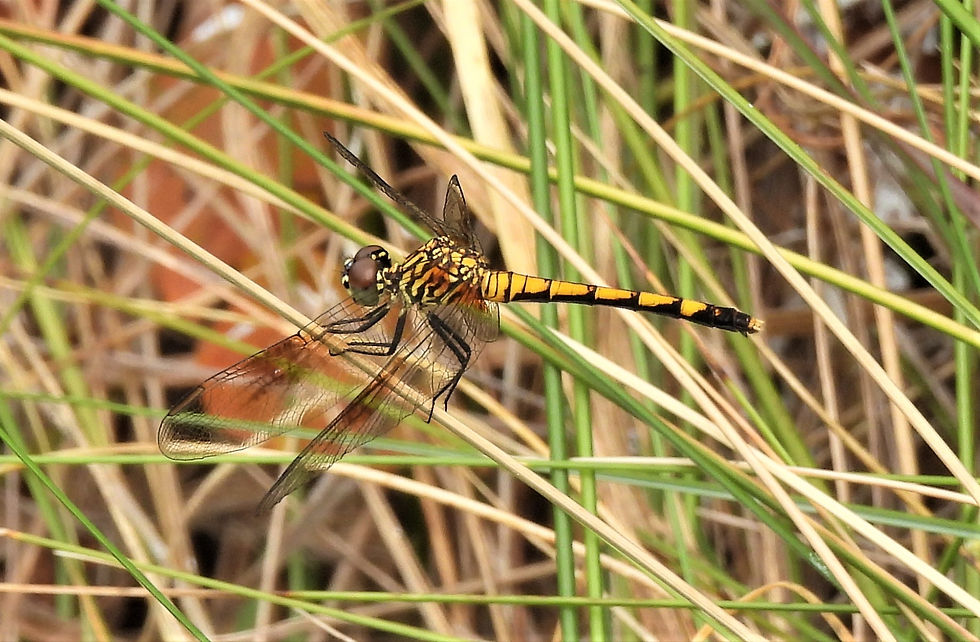
On a hot August morning a few years ago, I noticed these dark, almost black dragonflies perched every few meters along trails near the Bodie Island Lighthouse at Cape Hatteras National Seashore. Those were mature male Seaside Dragonlets. Lots of tiger-striped yellow and black dragonflies of similar size were nearby. Those were the females and immatures. The lighthouse sits on a chunk of lawn right next to a saltmarsh on the backside of the barrier island - perfect habitat for these dragonflies whose larvae can tolerate water three times as salty as typical ocean water.(1)

This is a bigger deal than it may seem. Very few insects live in saltwater and very few animals of any kind have the ability to survive in both salty and fresh water. The problem is that when you live underwater, you need to extract oxygen from the water, which means exposing a direct path to your bloodstream to the water. (Or your hemolymph-filled innards, if you don’t have blood, but that’s not important right now.) Gills are highly vascularized and designed to allow dissolved gasses to pass from the environment to the body and vice versa. The inside of an animal is typically saltier than freshwater and less salty than saltwater. Since things want to be in equilibrium, water will move from a less salty solution to a more salty solution to even things out. So an insect, fish, crab, or whatever will have water oozing into it through the gills in freshwater and water oozing out of it through the gills in saltwater. How do they do this? The two word explanation is: it’s complicated. Let’s just say that preventing water from going where it wants to go is not easy. If you’ve ever done plumbing in your home or tried to seal a basement wall, you know this. When a whole group of animals like the Odonates are adapted to life in freshwater and one species goes rogue and moves to saltwater, that’s a big change in physiology.
Various dragonflies have probably tried to lay eggs in saltwater for a hundred million years. It failed every time, except for that one time it didn’t and we got the Seaside Dragonlet.

Not content with being a pioneer of marine ecosystems, the Seaside Dragonlet has also taken slothful behavior to a whole new level. Some dragonflies perch more than others. If you go to a prairie field, you may see dashers and skimmers that fly almost constantly - more than a little frustrating for people who like to photograph them. Others, like meadowhawks, spend a good deal of time just hanging out perched somewhere. The Seaside Dragonlet spends around 99% of its time perched. Yes, someone studied this.(2) So, on a long summer day with 15 hours of daylight, a Seaside Dragonlet might have been flying for a total of 9 minutes. If your prey items are numerous and mobile, you can afford to sit in one place and wait for them to come close enough that a three-second flight is a good meal. Saltmarshes are full of clouds of flying insects passing through during the day. The dragonlets just sit and wait for delivery.
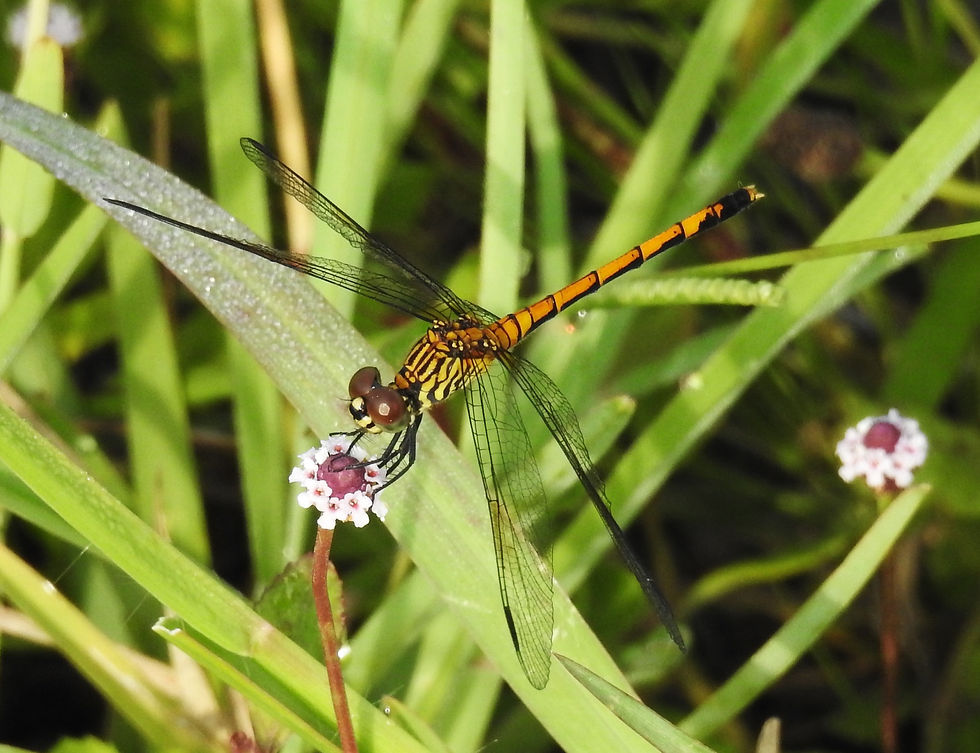
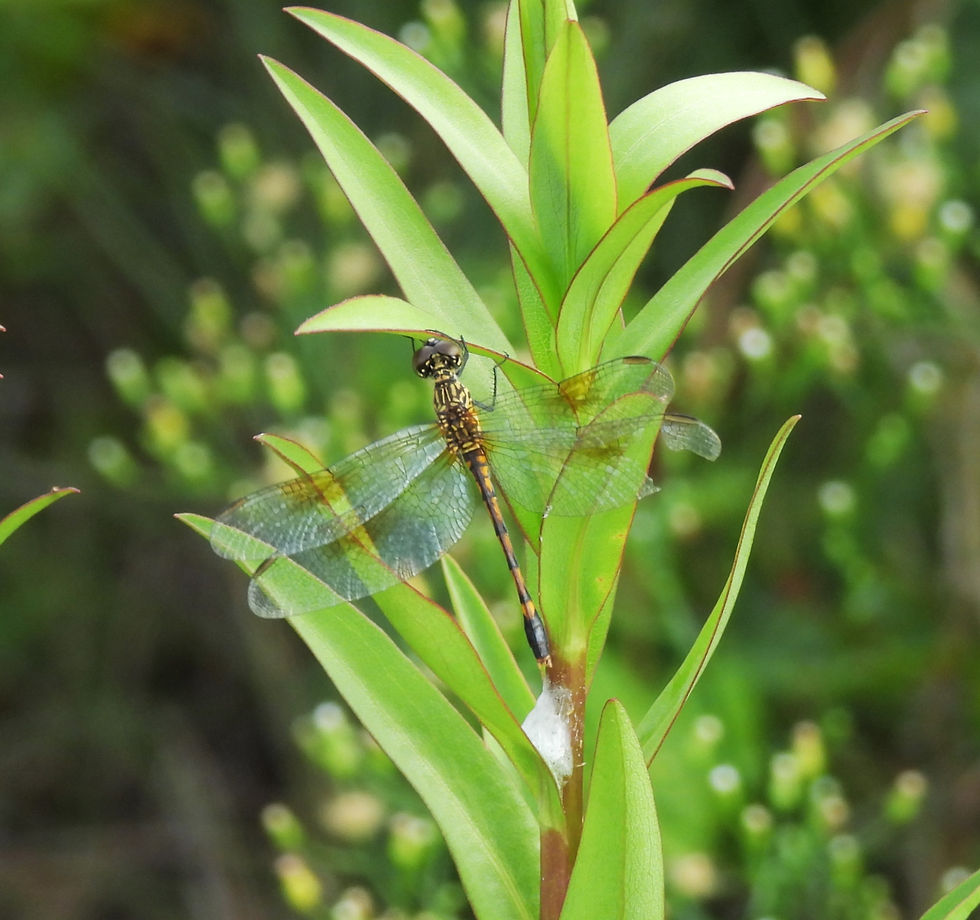
The next time you’re visiting the coast, take a look for these dragonflies. They’ll be perched on plants along paths to the beach, boardwalks in saltmarshes, and other trails near the shore. The deep, dark slate-blue males are distinctive and easy to spot. You’ll be looking at an animal that went out and colonized new habitat just so it could become the laziest dragonfly ever. There’s something admirable in that.
Dunson, W. A. (1980). Adaptations of nymphs of a marine dragonfly, Erythrodiplax berenice, to wide variations in salinity. Physiological Zoology, 53(4), 445-452.
Wilson, W. H. (2008). The behavior of the Seaside Dragonlet, Erythrodiplax berenice (Odonata: Libellulidae), in a Maine salt marsh. Northeastern Naturalist, 15(3), 465-468.


Comments